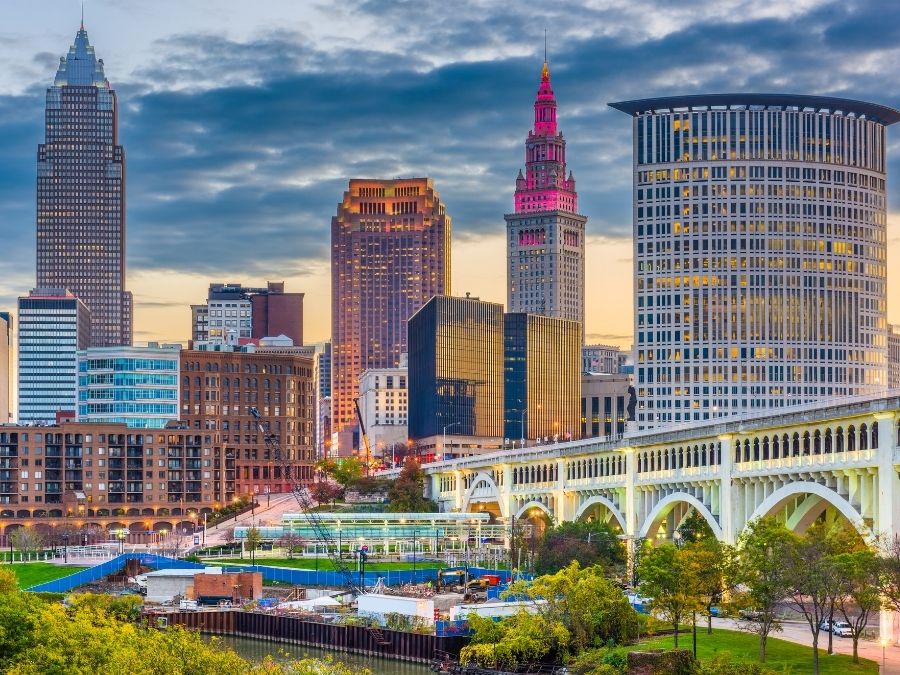
The Story of Cleveland: How Industry Shaped the City You See Today
Cleveland’s history is deeply tied to its role as an industrial powerhouse. In the late 19th and early 20th centuries, the city became a central hub for manufacturing, shipping, and production along Lake Erie.
Steel, oil, and railroads weren’t just industries here — they defined the pace of life. Jobs were steady, neighborhoods grew quickly, and the city expanded with purpose.
But like many industrial cities, Cleveland faced a turning point. As manufacturing declined in the mid-20th century, population dropped and parts of the city were left to adapt or fade.
What makes Cleveland different is how it responded.
Instead of disappearing, it began rebuilding around healthcare, education, and culture. Institutions like the Cleveland Clinic helped reshape the economy, while areas like Ohio City and Tremont slowly evolved into hubs for food, art, and small business.
Today, you can still see the city’s past in its architecture, its neighborhoods, and even its pace. Cleveland doesn’t hide where it came from — it builds on it.
Understanding that history gives you a better sense of why the city feels the way it does now.